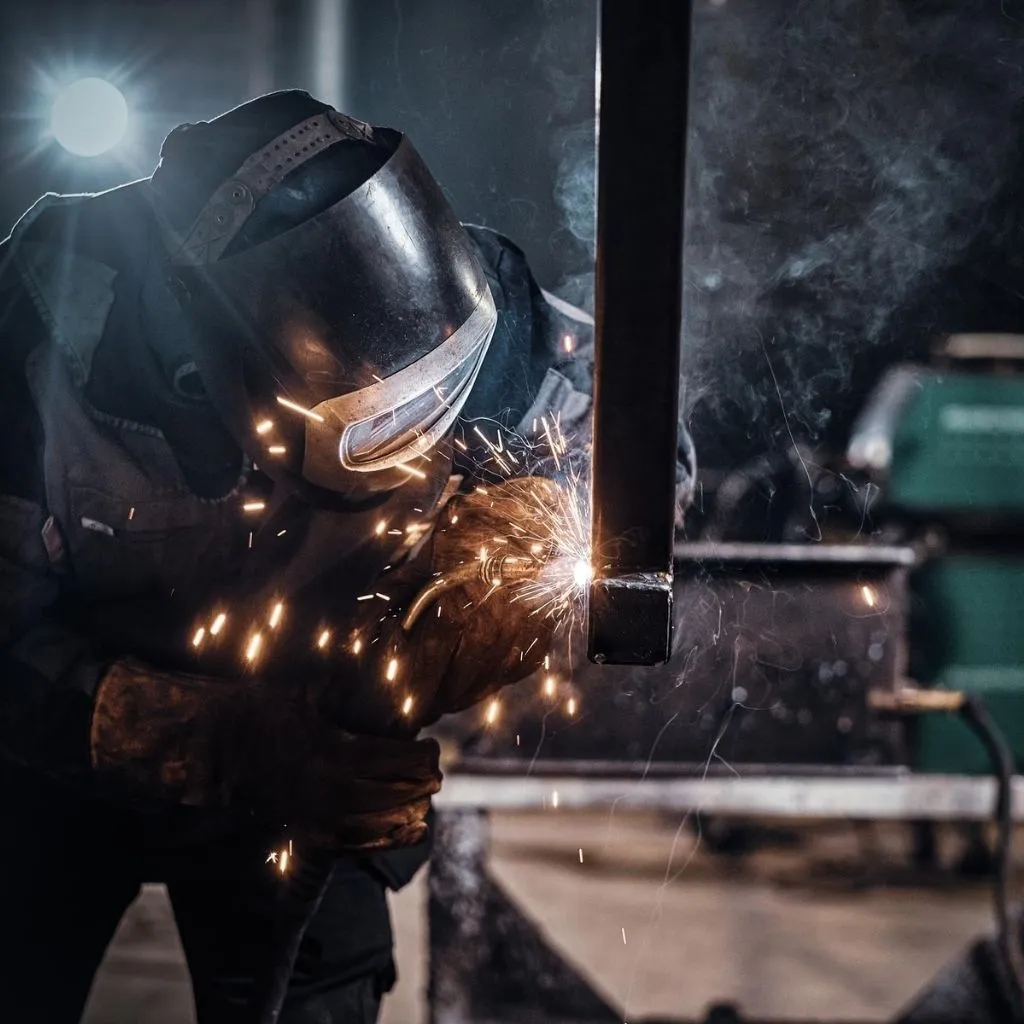
After the welding process is completed, the weld seam is examined in terms of surface smoothness and continuity. A welding method performed with correct parameters provides long-lasting and aesthetically consistent joints. For a detailed explanation of the application, you can review the related content.
How is Gas Metal Arc Welding Done?
Gas metal arc welding is defined as a joining technique performed using continuous wire feeding and shielding gas. Before the technical process begins, the material type, thickness, and weld position are determined.
Wire diameter and gas mixture are selected according to the desired weld profile. To ensure stable arc progression, current and wire feed speed are adjusted in a balanced manner. Removing oil and oxide residues during surface preparation directly affects weld continuity. The welding process used in this method offers an advantage by increasing production speed thanks to its suitability for serial production.
During the application of gas metal arc welding, the distance between the welding torch and the workpiece is kept constant. The wire is continuously and controllably fed into the molten pool. The shielding gas isolates the welding area from atmospheric effects, limiting the risk of oxidation.
Throughout the joining process, the form of the weld pool and the travel path are regularly observed. Maintaining a consistent speed along the seam is important for surface smoothness. This process provides a practical and production-oriented answer to the question of how welding is done.
The application steps of gas metal arc welding are generally structured as follows:
- Mechanical cleaning of material surfaces
- Determination of wire diameter and shielding gas type
- Balancing current, voltage, and wire feed speed
- Advancing the welding torch at the correct angle and distance
Once the welding process is completed, the weld seam is evaluated in terms of continuity, surface smoothness, and joint quality. Gas metal arc welding performed with correct parameters creates durable and homogeneous joints.
How is Micro Welding Done?
This method, used in applications requiring micro-scale joining, stands out with low heat input and high control precision. When working on thin metal parts, electronic components, or small mechanical details, a focused energy source is preferred.
Before applying the welding method, part surfaces are cleaned at micron level, and fixation is performed to prevent vibration. Energy duration, current value, and focal point are carefully adjusted. Welding in sensitive areas requires technical discipline to prevent damage to surrounding structures.
The progression of the micro welding process is directly related to operator control and equipment stability. Weld points are created with short pulses, and heat spread is kept to a minimum. The use of filler material may be limited or completely excluded depending on the application type. Visual magnification systems allow real-time monitoring of the joint line. This approach places the topic of how welding is done on a different technical plane compared to macro methods. Throughout the process, each contact point is evaluated individually, and sequential passes are avoided.
The basic stages of micro welding can be summarized as follows:
- Positioning parts with micron-level precision
- Adjusting energy duration and current values within low ranges
- Fixing the focal point on the joint line
- Creating weld points with short and controlled pulses
After completion, the joint area is inspected under magnification. Micro welding applications performed with correct settings provide reliable results in production processes requiring high precision.
How is Pipe Welding Done?
Welding methods applied in pipe joints are planned to meet both sealing and mechanical strength requirements together. Before the process, the pipe diameter and the system in which it will be used are determined.
Edge preparation is performed with precision, as it directly affects weld penetration. Alignment and tack welding stages are carefully completed to prevent axial misalignment. Maintaining balanced heat input reduces the risk of deformation, especially in long pipelines. The selected method may vary according to project requirements; at this point, the application areas of resistance welding stand out in serial and repetitive pipe connections.
During the process, continuity of the weld pool is maintained, and travel speed is kept constant. Ensuring even heat distribution along the seam positively affects inner surface quality. Post-weld cooling is carried out in a controlled manner, avoiding sudden temperature differences. This approach contributes to obtaining reliable joints in pipelines. The application logic requires addressing the topic of how welding is done with pipe-specific technical details.
The application steps of pipe welding are generally structured as follows:
- Preparing pipe ends at appropriate angles and dimensions
- Performing alignment and tack welding to ensure axial accuracy
- Balancing current, travel speed, and welding position
- Ensuring continuity and penetration control along the seam
After completion, the weld line is subjected to visual and technical inspections. Pipe welding applications performed with correct parameters create long-lasting and leak-tight connections.
For detailed guidance on methods, machine usage, and application criteria related to the question of how welding is done, you can contact Eko Kaynak.