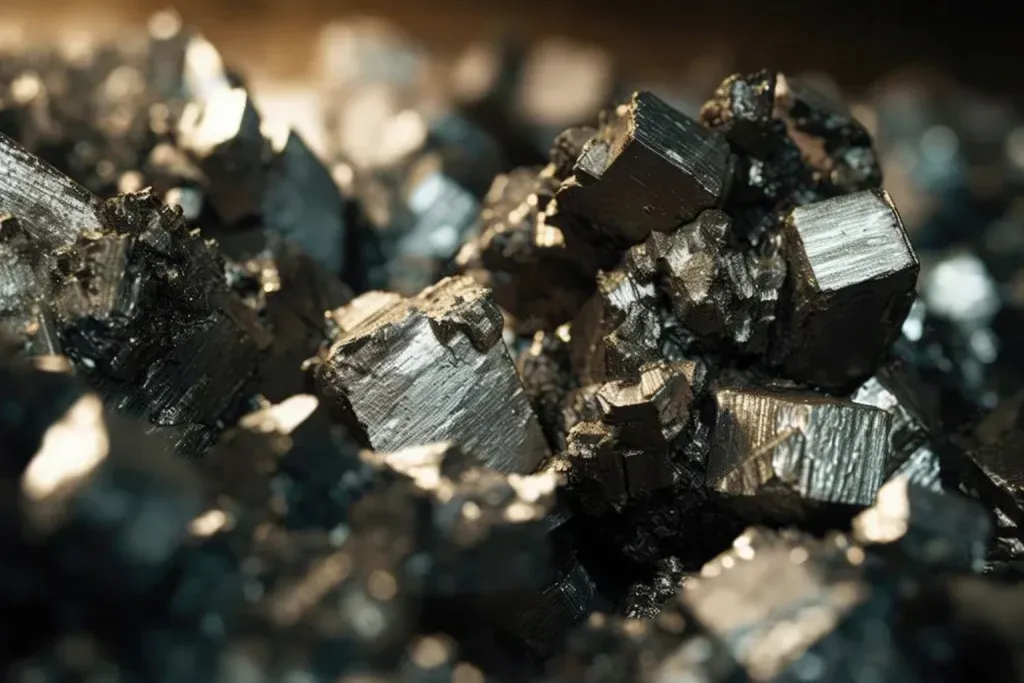
Nickel, which is among the metals preferred in industrial production, provides functional solutions in numerous sectors thanks to its different physical and chemical properties. Its corrosion-resistant structure, ability to maintain its form under high temperatures, and compatibility with alloys enable this metal to have a broad range of applications.
Nickel-based electrodes used in production processes play an important role in joining operations that require high strength. Likewise, nickel welding applications contribute to the safe joining of different metals, thereby supporting the continuity of industrial production.
The question what are the areas of nickel use finds a clearer answer when examining the roles this metal undertakes in different sectors. Accordingly, the prominent areas of nickel use can be summarized as follows:
- Production of stainless steel and special alloys
- Equipment for the energy, petrochemical, and chemical industries
- Electronic components and battery technologies
- Industrial parts exposed to high temperature and pressure
- Strength-enhancing solutions in construction and infrastructure systems
Thanks to its physical strength and versatile usage characteristics, nickel is positioned as a strategic metal in industrial production. The long-lasting and reliable solutions it offers in different sectors make this metal an important element not only technically but also in terms of production planning. When used in the right areas and with appropriate methods, it directly contributes to the efficiency of production processes.
- Its mechanical strength contributes to the production of parts resistant to impact, pressure, and wear.
- With its recyclable structure, it aligns with environmental sustainability goals.
- Its long service life helps reduce maintenance and renewal costs.
- Thanks to its aesthetic surface properties, it enables the emergence of products preferred both functionally and visually.
When all these features are evaluated together, it is seen that nickel is a metal that provides advantages not only technically but also economically. When used in proper production processes and under suitable conditions, it offers significant contributions to manufacturers in terms of performance and resource efficiency.
The Importance of Nickel in Welding Technologies
Where is it Used in Welding Technologies? In industrial joining processes, material selection directly affects the quality of the final result. At this point, nickel has a special place in welding technologies thanks to its ability to bring different metals together and the resistance it shows against harsh conditions.
Its ability to maintain structural integrity under high temperatures makes it not only a filler metal but also a performance-enhancing element. Nickel-containing solutions are preferred in the joining of parts exposed to high pressure, heat, and chemical effects.
The main areas of application of nickel in welding processes are as follows:
- Use as a filler metal in the joining of stainless steel and special alloys
- Providing compatibility at junction points where different metal types are present together
- Preference in the welding of industrial equipment parts operating under high temperatures
- Use in pressure-resistant pipe and tank connections in the chemical, petrochemical, and energy sectors
- Contributing to the formation of long-lasting connections in corrosion-prone environments
The use of this metal in welding processes is not limited solely to providing mechanical strength; it is also decisive in terms of production safety and product lifespan. In this context, areas of nickel use are evaluated not only as a main material but also as a critical part of joining technologies. Correctly selected nickel-containing solutions contribute to the homogeneous structure of weld seams and help reduce the risk of deformations that may occur over time.
The role of nickel in welding technologies goes beyond being a simple auxiliary material. Thanks to the contribution it provides in creating durable, compatible, and long-lasting connections, it stands out as one of the indispensable elements of modern production processes.
For developing solutions suitable for your industrial needs regarding areas of nickel use, and for making the right material and application choices in your production processes, you can contact Eko Kaynak.