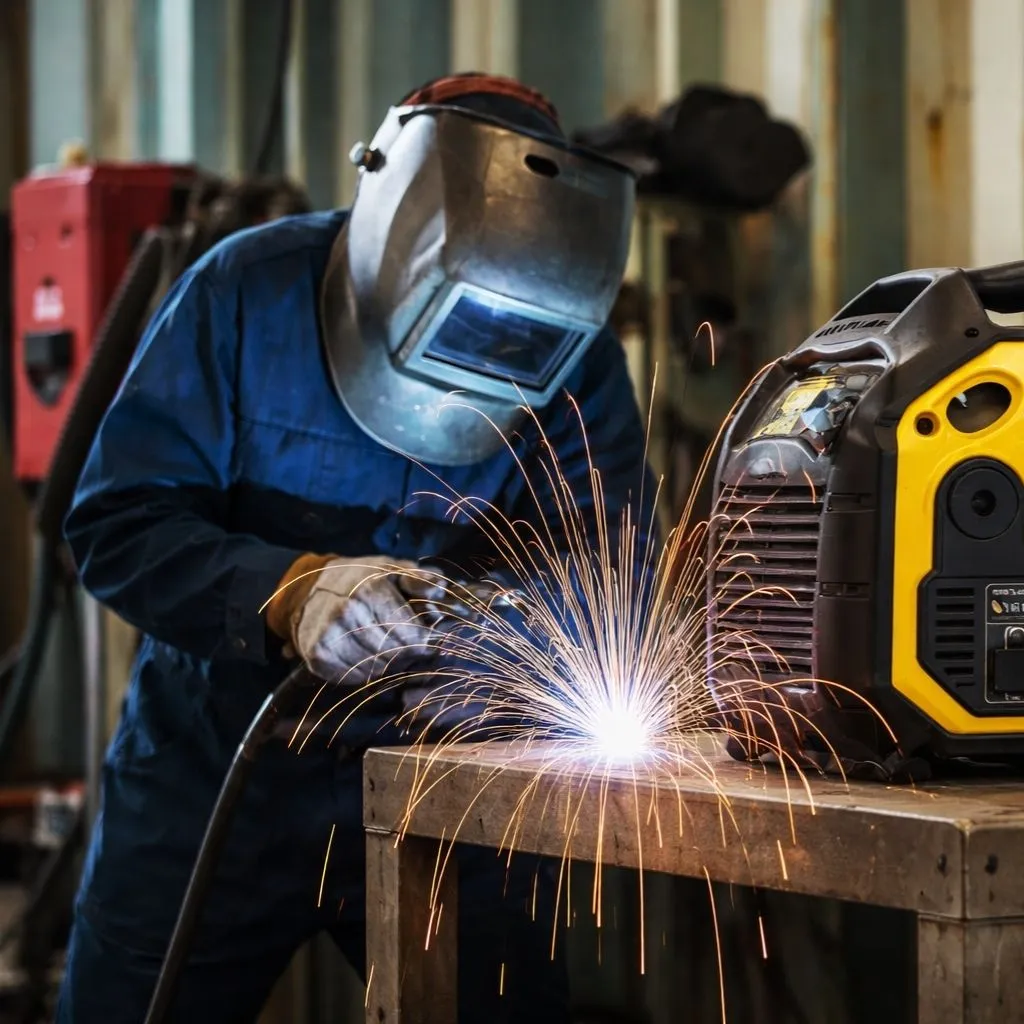
The cost of TIG equipment used in industrial production varies depending on factors such as power capacity, current control system, and the intended use of the machine. During the purchasing process, the compatibility between technical specifications and production needs is evaluated, and the budget planning is shaped accordingly.
Significant cost differences can be observed among models offered in different market segments. Systems with variable current options may provide flexible working capability for different metal types. For this reason, parameters such as power rating, cooling structure, and control functions are evaluated together during the purchasing decision. The AC/DC operating principle used in production processes contributes to the machine’s ability to work compatibly with different metals.
During the evaluation process, the following factors may be decisive in pricing:
- Power capacity: Machines with a wider amperage range can create a stable arc on thicker materials. This may directly affect the cost range of the equipment.
- Cooling system: Air-cooled or water-cooled structures provide different performance levels in long-term usage scenarios. Durability expectations in industrial applications may increase the cost.
- Control features: Systems with digital panels, pulse current adjustment, and precise arc control may contribute to more stable welding quality.
- Purpose of use: Models preferred for workshop work, serial production lines, or maintenance and repair processes include different equipment levels.
- Brand and service network: Technical support, spare parts accessibility, and warranty coverage may affect long-term operating costs.
Selecting technical features that match production requirements contributes to the sustainable performance of the equipment. For detailed information about different model options and current cost ranges, you can review the AC/DC TIG Welding Machine Prices article.
- Material compatibility: Systems capable of creating stable joints in aluminum, stainless steel, or thin metal sheets can be used in different production processes.
- Controlled heat distribution: Balanced arc formation may contribute to reducing deformation risk on the metal surface and help the joint line progress more regularly.
- Precision working capability: Maintaining surface integrity on thin parts becomes possible through balanced control of the weld pool.
- Application flexibility: Different usage scenarios can be created in workshop production, maintenance and repair work, or industrial production lines.
- Equipment structure: The welding machine model used is selected according to production needs in terms of current control options and operating capacity.
When the correct equipment is preferred, joint quality may progress more consistently and contribute to achieving long-lasting connections in production processes.
AC/DC TIG Welding Machine Application Areas
Equipment that generates a controlled arc in production processes where different types of metals must be joined offers a wide range of applications. In applications requiring precise surface integrity, a stable joint line may contribute to maintaining production quality.
Systems with variable current options are preferred in many industries because they can adapt to different metal properties. A consistently progressing joint line on thin parts may help preserve surface integrity during production. For this reason, the TIG welding machine is among the equipment used in different production scales.
When the application areas are examined, the diversity of use covers a very broad production structure. If the correct method is not selected in metal processing processes, situations such as deformation, surface deterioration, or weak joints may occur. Processes carried out with suitable equipment and proper settings may contribute to creating a more balanced joint line.
The application areas observed in different sectors generally concentrate on the following production processes: