What Amperage Should a Welding Machine Be?

What amperage should a welding machine be depends on the type of welding process being performed and the thickness of the material being joined. Lower current values are typically preferred for thin sheet applications, while thicker metal components generally require higher amperage settings.

What amperage should a welding machine be is determined by technical variables such as material thickness, electrode diameter, and the selected welding method. Incorrect current settings may reduce weld seam quality, increase spatter, and cause deformation in the material. In industrial production, selecting the correct amperage is considered an important parameter that directly affects weld penetration, heat control, and overall process stability.

What Determines the Amperage Selection of a Welding Machine?

The current value of equipment used in metal joining processes is determined according to the technical requirements of the application. When the correct current range is selected, the weld seam forms more evenly and penetration control becomes more stable.

Correctly determining welding machine settings during the application is considered an important parameter for seam quality and production safety. Metals of different thicknesses, varying electrode diameters, and preferred welding methods may cause the current value to change. For this reason, many users seek an answer to the question what amperage should a welding machine be based on technical criteria.

The main technical factors determining the appropriate current range are as follows:

Material thickness: Lower current is preferred on thin metal surfaces. Using higher values in thicker workpieces helps the weld achieve sufficient penetration into the material.

Electrode diameter: As the electrode size increases, the required current value also increases. Smaller diameter electrodes create a more stable weld pool at lower current levels.

Welding method: Methods such as MIG, MAG, or TIG operate with different current ranges. Each method differs in heat distribution and wire feed characteristics.

Working position: More controlled current is used in overhead or vertical positions. On horizontal surfaces, a wider adjustment range may be preferred.

Thermal conductivity of the workpiece: Metals such as carbon steel, stainless steel, or aluminum exhibit different heat behaviors. This leads to changes in amperage welding

Incorrect current selection may lead to problems such as pore formation in the weld seam, increased spatter, or material deformation. At very low values the seam may remain on the surface, while at high values burning may occur on the metal surface. For this reason, the characteristics of the workpiece are evaluated before application to determine how many amperes should be used.

Thickness of the Material to Be Welded

As the thickness of the metal surface increases, the required current value also rises; low current is used for thin sheet applications, while higher amperage settings are preferred for thicker parts.

Electrode Diameter

As the diameter of the electrode used increases, the required current value also increases. For more information about electrode types and usage details, you can review the Welding Electrode article.

Purpose of Use

In different applications such as industrial production, maintenance and repair, or assembly, the preferred method and material type may cause the current setting to vary.

Continuous Operating Time

In applications that will operate continuously for long periods, the duty cycle of the equipment should be considered and the current setting should be determined within the range where the machine can operate stably.

Kaynak Makinesi Kaç Amper Olmalı?

Eko Kaynak Welding Machine Types

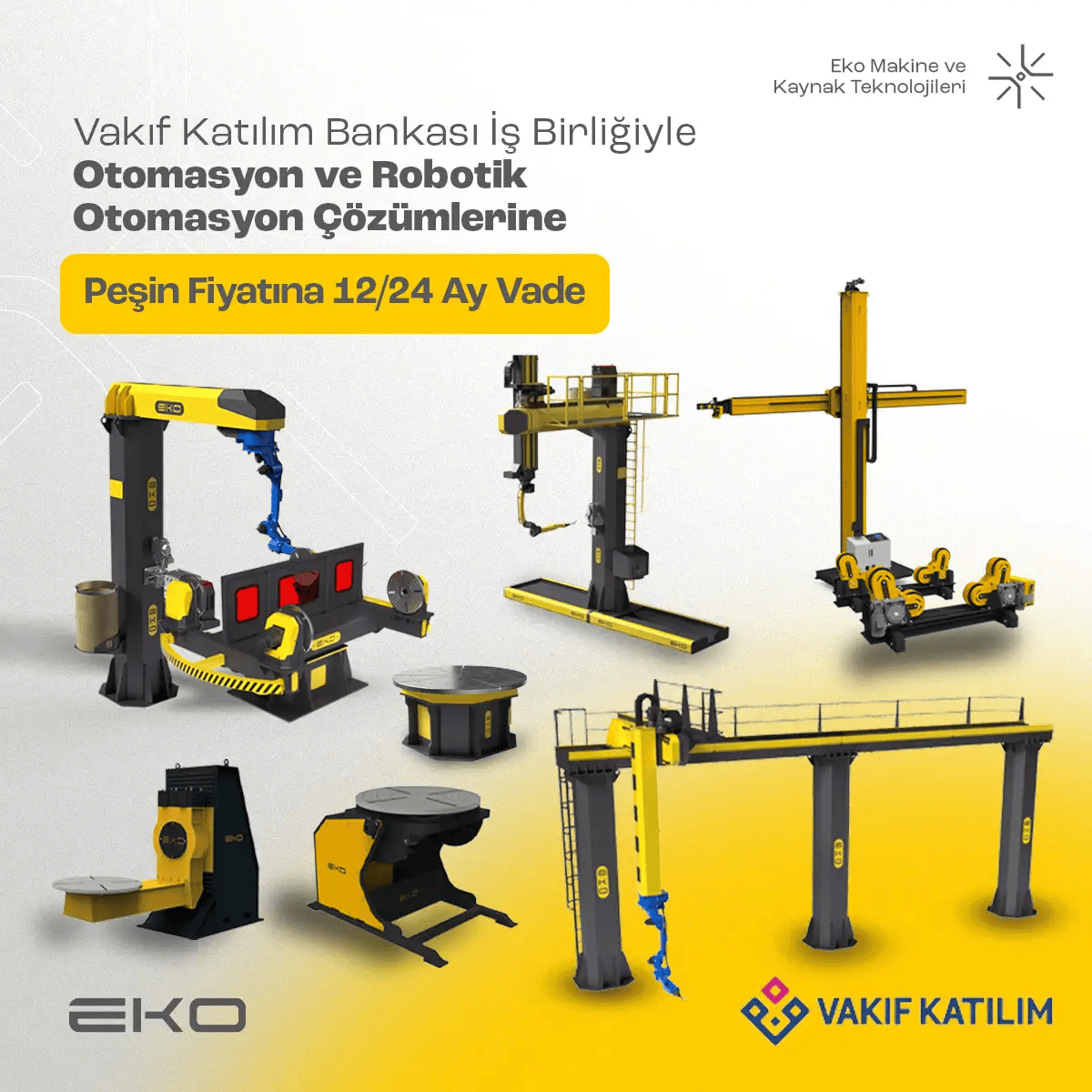
Eko Kaynak, which develops industrial production solutions, offers welding machines and automation systems designed for different manufacturing needs. Technical parameters such as the characteristics of the production line, the material type, and amperage values play a decisive role in choosing suitable equipment.

Choosing the wrong system may reduce seam quality, extend production times, and limit equipment performance. For this reason, when production planning is carried out, the question what amperage should a welding machine be is evaluated together with system types.

The main system types used in industrial production can be summarized as follows:

  • MIG / MAG systems: Equipment operating with the gas metal arc welding method is widely used in mass production lines. Thanks to the wire feeding mechanism, a stable welding process can be performed in long seams.
  • Systems operating with the TIG method: Preferred in more precise applications. They provide controlled heat distribution when joining stainless steel or thin metal parts.
  • Submerged arc systems: Among the industrial solutions used for joining thick metal parts. Their high penetration capability makes them suitable for heavy industry production.
  • Plasma and laser technologies: Used in productions requiring high precision. Narrow and controlled seams can be achieved thanks to high energy density methods.
  • Robotic and automation systems: Among the solutions preferred in large-scale production lines. Automation integration can increase production speed and process repeatability.

For more detailed technical information about equipment types, the Welding Machine Types guide can be reviewed. Choosing the correct system contributes to maintaining production quality and ensuring that industrial processes proceed more steadily.

For more detailed information about what amperage should a welding machine be and to review solutions suitable for your production needs, you can contact Eko Kaynak.