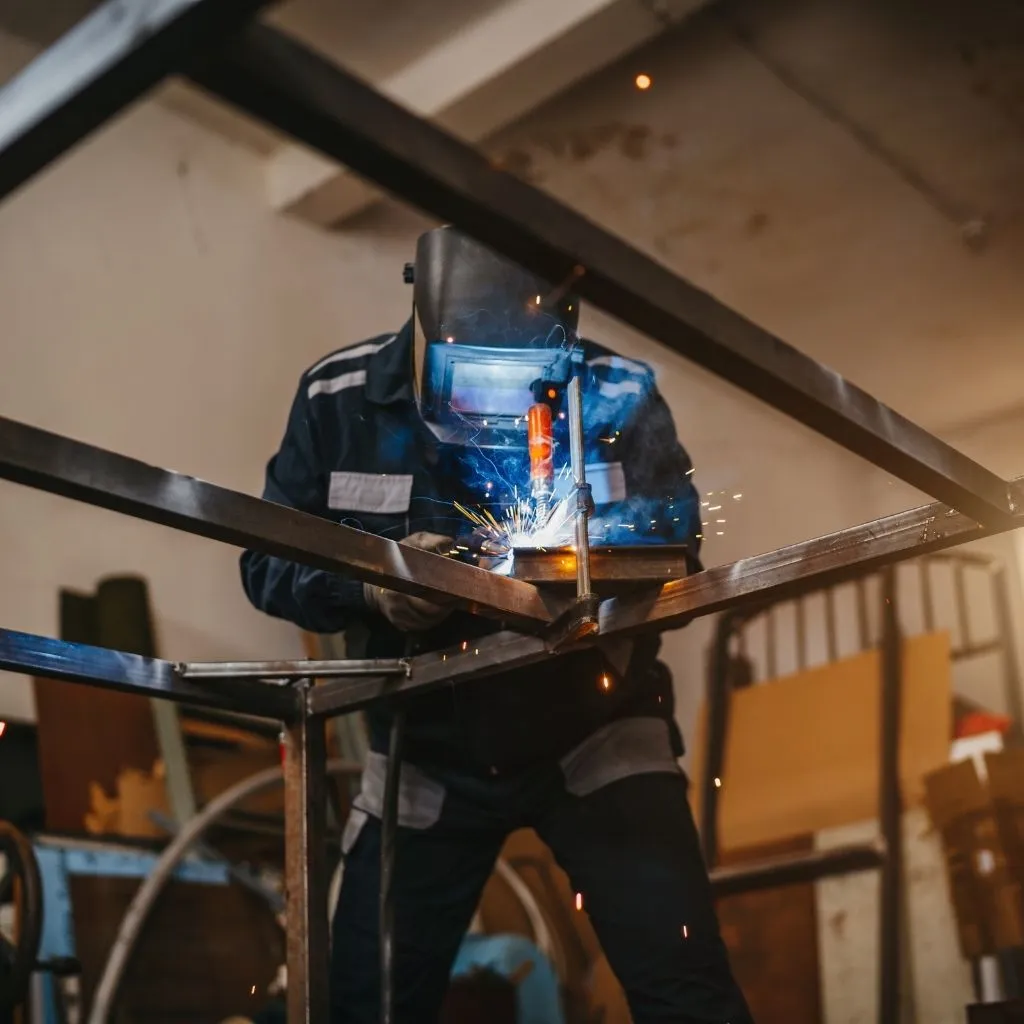
What is Surface Tension?

What is surface tension refers to the tension equilibrium formed on the surface of liquids due to the intermolecular attraction forces between molecules. When metal melts, the same physical effect appears and a natural tendency of gathering occurs on the surface of the liquid metal. This balance is one of the fundamental factors that determines how molten metal spreads across a surface.

What is surface tension in metal joining processes is an important concept for understanding molten metal behavior. Parameters such as heat input, metal composition, and shielding gas can alter the tension balance on the liquid metal surface. These changes may influence how the molten metal pool spreads and the shape of the weld bead. In production processes, forming a stable weld pool may contribute to achieving more consistent and reliable results along the joint line.

What is Surface Tension in Welding Processes?

In metal joining operations, the way molten metal spreads across a surface can directly affect the shape and stability of the weld bead. Metal that becomes liquid under the effect of heat moves under a certain attraction balance and tends to gather on the surface.

The surface behavior observed in the molten metal pool formed during welding is explained by the concept of surface tension. The tension balance that occurs on the metal surface directs the spreading direction of the molten metal and its movement along the joint line.

During application, the area where molten metal accumulates is called the weld pool. Surface tension can influence the formation of this area, the weld bead width, and penetration behavior. The amount of energy, the type of wire or electrode used, and the characteristics of the shielding gas may change this balance.

Molten metal behavior does not progress in the same way in different methods. For example, surface tension may show different characteristics in applications such as MIG, TIG, or gas-shielded welding. For this reason, the welding electrode used and the process settings play an important role in controlling molten metal flow.

In industrial applications, the effects of surface tension can be observed more clearly in the following situations:

  • The flow of molten metal toward the joint line may contribute to the formation of a more regular weld bead.
  • Balancing the distribution of energy may influence penetration depth.
  • The spreading behavior of molten metal may support the homogeneity of the joint line.
  • With appropriate parameters, metal flow can become more stable.

In industrial environments, surface tension is an important physical effect that determines the direction of metal flow and its distribution along the joint line. When correct parameters are selected, molten metal moves in a more controlled manner and the resulting weld bead may gain a more uniform appearance.

How is Surface Tension Controlled in Welding Processes?

During metal joining, the behavior of metal that becomes liquid can directly influence the weld bead form and the stability of the joint line. The balanced spreading and stability of the molten metal pool play an important role in maintaining joint quality. For this reason, in production processes, not only the question what is surface tension but also how this tension balance is managed becomes a subject of interest.

Factors such as heat amount, wire feed speed, gas shielding, and application technique can change the tension behavior on the liquid metal surface. With correct adjustments, metal flow becomes more stable and the weld bead may achieve a more regular appearance.

Molten metal behavior may vary depending on the welding method used. The type of process applied directly influences the flow characteristics of the metal. For example, in MIG/TIG welding applications, since energy transfer and shielding gas structure differ, surface tension behavior may also change.

The main points considered in production environments to manage surface tension include:

  • Balancing heat input: Maintaining arc energy at an appropriate level may prevent sudden spreading of molten metal and contribute to a more stable weld pool.
  • Adjusting wire feed speed: As the wire feed amount increases, the behavior of the metal pool may change. Balanced feeding helps keep metal flow under control.
  • Shielding gas selection: The properties of the gas mixture may influence the tension balance on the molten metal surface. Using an appropriate gas may contribute to a more uniform weld bead appearance.
  • Application position: The welding angle and torch position may alter the spreading direction of the metal. Correct positioning supports the stability of the weld pool.
  • Surface preparation: Clean and smooth surfaces may help metal flow progress in a more controlled manner.

With correct process settings, metal flow may achieve a more balanced and stable structure. As a result, more consistent outcomes may be obtained in terms of weld bead form, penetration, and overall joint quality.

Yüzey Gerilimi Nedir?

Surface Tension and Its Effect on Welding Quality

During metal joining, the surface movement of molten metal is one of the key factors determining the form and strength of the weld bead. Balanced spreading of liquid metal across the surface contributes to the orderly progression of the joint line.

When examining factors that influence quality in production processes, the question what is surface tension points to an important aspect. The attraction balance that forms on the molten metal surface directs the movement of the metal pool and the flow along the joint line. When the tension balance forms correctly, the weld bead can progress more stably and the joint surface may gain a more uniform structure.

The method used in the application can directly influence molten metal behavior. Energy transfer, wire feed amount, and shielding gas structure change the movement of the metal pool. For example, in gas-shielded welding methods, molten metal may spread in a more controlled manner thanks to the stable environment provided by the shielding gas.

This situation may contribute to a more balanced appearance on the weld surface. Correct progression of metal flow increases continuity along the joint line and helps maintain production quality.

The relationship between surface tension and welding quality can be observed more clearly in the following aspects of the production process:

  • Weld bead form: Balanced spreading of molten metal on the surface may contribute to a smoother weld geometry.
  • Metal flow: Stable metal flow may reduce the risk of void formation along the joint line and help create a more homogeneous structure.
  • Spatter amount: Balanced surface behavior may reduce metal spatter and help achieve a cleaner surface.
  • Penetration behavior: Balanced progression of the metal pool may support the formation of more suitable penetration along the joint line.
  • Production continuity: A stable weld pool may facilitate operator control and provide more consistent results in repetitive production.

When appropriate parameters are selected during application, metal flow may progress more stably. As a result, more reliable outcomes may be obtained in terms of weld bead form, joint strength, and overall welding quality.

For more technical information about what surface tension is and for industrial welding solutions, you can contact Eko Kaynak.