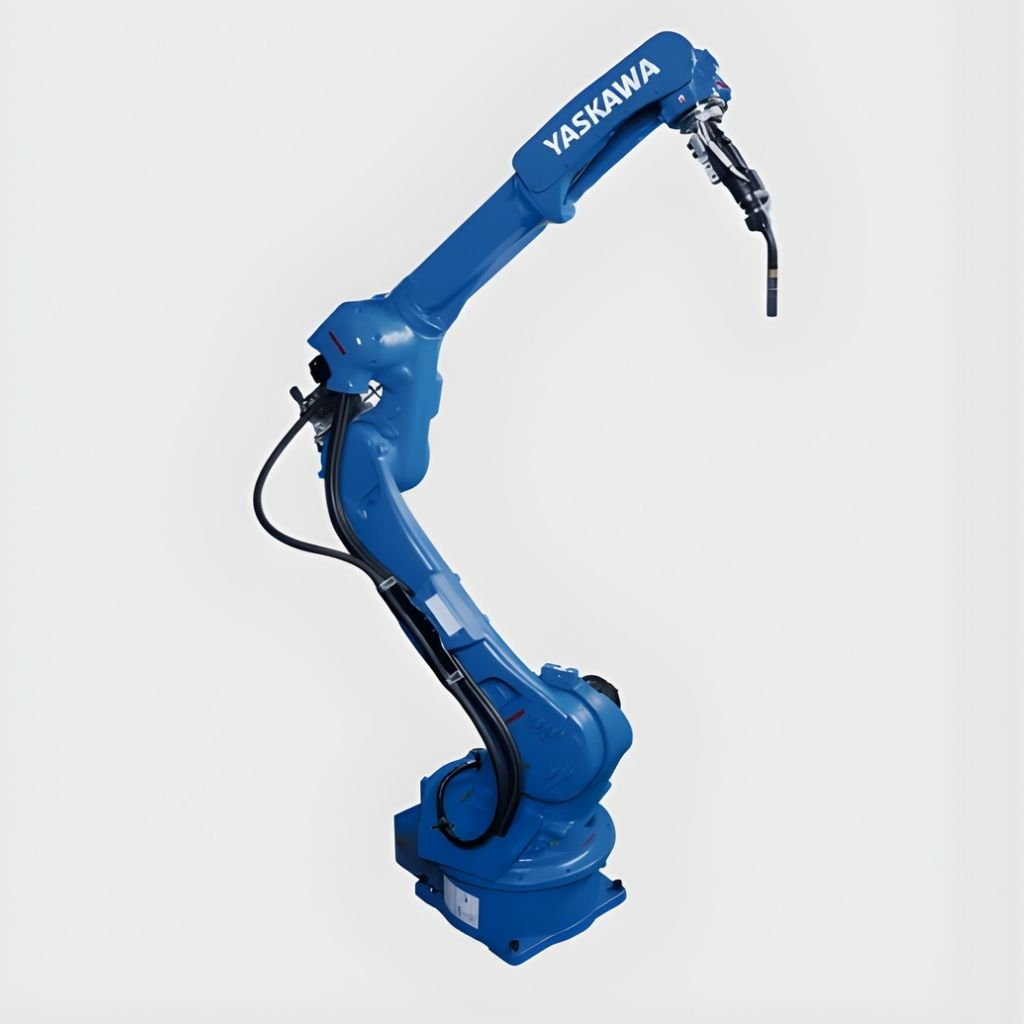
Gas Metal Arc Welding Robot

Gas metal arc welding robot is among the automation solutions developed for industrial production processes that require repeatability and operational continuity. The system helps maintain standard weld seam quality in mass production while offering a structure that reduces operator dependency. Thanks to a planned workflow within production lines, process durations become more predictable. It provides a technical infrastructure that facilitates process management in facilities with high production intensity.

Gas metal arc welding robot automation configurations can be structured to operate in integration with positioners, rotators, and column-boom systems. Axis movements capable of adapting to different part geometries support a production approach focused on consistent quality. Programmable motion capability enables the same level of precision to be maintained during long-term and continuous operations. This structure, preferred in heavy industry, steel construction, and manufacturing lines, is considered a technical solution aimed at increasing production efficiency. Automation components integrated into the process also help establish a balanced working environment in terms of occupational safety and time management.

Gas Metal Arc Welding Robot Prices

Gas metal arc welding equipment costs are shaped by many technical and economic variables for enterprises planning industrial automation investments. The pricing structure of systems is evaluated based on factors such as mechanical structure, control infrastructure, number of axes, and integration capacity.

As the scope of the solution to be integrated into the production line expands, the cost range varies accordingly. Systems preferred in mass production facilities are assessed in line with long-term efficiency objectives. The gas metal arc welding automation solution used within the automation infrastructure is evaluated not only by its investment cost but also by the production continuity and standard quality advantages it provides.

When determining pricing, not only the main system body but also peripheral equipment and software components are taken into consideration. Positioners, rotators, column-boom systems, and safety equipment to be used directly affect the total budget.

The size and geometry of the parts to be produced play a significant role in determining the system’s technical capacity. As with automation solutions in general, robotic welding infrastructures are among investments that require project-based planning.

The main factors affecting pricing are as follows:

  • Number of axes and range of motion
  • Payload capacity and reach distance
  • Control unit and software features
  • Auxiliary systems to be integrated
  • Safety hardware and environmental protection equipment
Gazaltı Kaynak Robotu

The existing infrastructure of the facility where the system will be installed is also decisive in cost calculations. When electrical, floor, and automation compatibility are ensured, the installation process progresses in a more controlled manner. Such solutions, evaluated as welding robots in industrial use, should be considered not only in terms of initial investment cost but also together with maintenance planning and operating expenses. They offer a technical investment approach aimed at increasing production capacity in the long term.

Gas Metal Arc Welding Robot Working Principle

The operational process of gas metal arc welding automation is based on controlled and repeatable automation within industrial production. The system operates through the simultaneous functioning of mechanical axes and welding equipment that move in line with predefined programs.

The structure integrated into the production line is supported by carrier systems positioned according to part geometry and sensor-assisted control mechanisms. Throughout the process, parameters such as speed, angle, and travel distance are managed via software. This approach contributes to maintaining the same quality standard without the need for manual intervention. Positioned at the center of the automation infrastructure, the welding robot operates with a control logic designed to reduce error margins in repetitive processes.

Within the scope of the gas metal arc welding robot working principle, system operation is shaped around specific technical steps. Before application, part fixing, positioning, and program verification stages are completed. The welding process then proceeds automatically within the framework of defined parameters.

The overall process progresses as follows:

  • Positioning the part on the correct axis using positioner or rotator systems
  • Digitally defining the weld path and creating the motion scenario
  • Adjusting current, speed, and wire feed values according to production requirements
  • Monitoring stability throughout the process via sensors
  • Automatically returning the system to its initial position upon completion

The gas metal arc welding technique allows the formation of a continuous and stable weld pool. Thanks to the control advantages provided by automation, quality consistency is ensured even in long weld seams.

When evaluated from a production planning perspective, the system establishes a working order compatible with time management and occupational safety criteria. This principle, preferred in industrial facilities, represents a technical standard for high-volume manufacturing processes.

To evaluate gas metal arc welding robot applications tailored to industrial needs, you may contact Eko Kaynak.