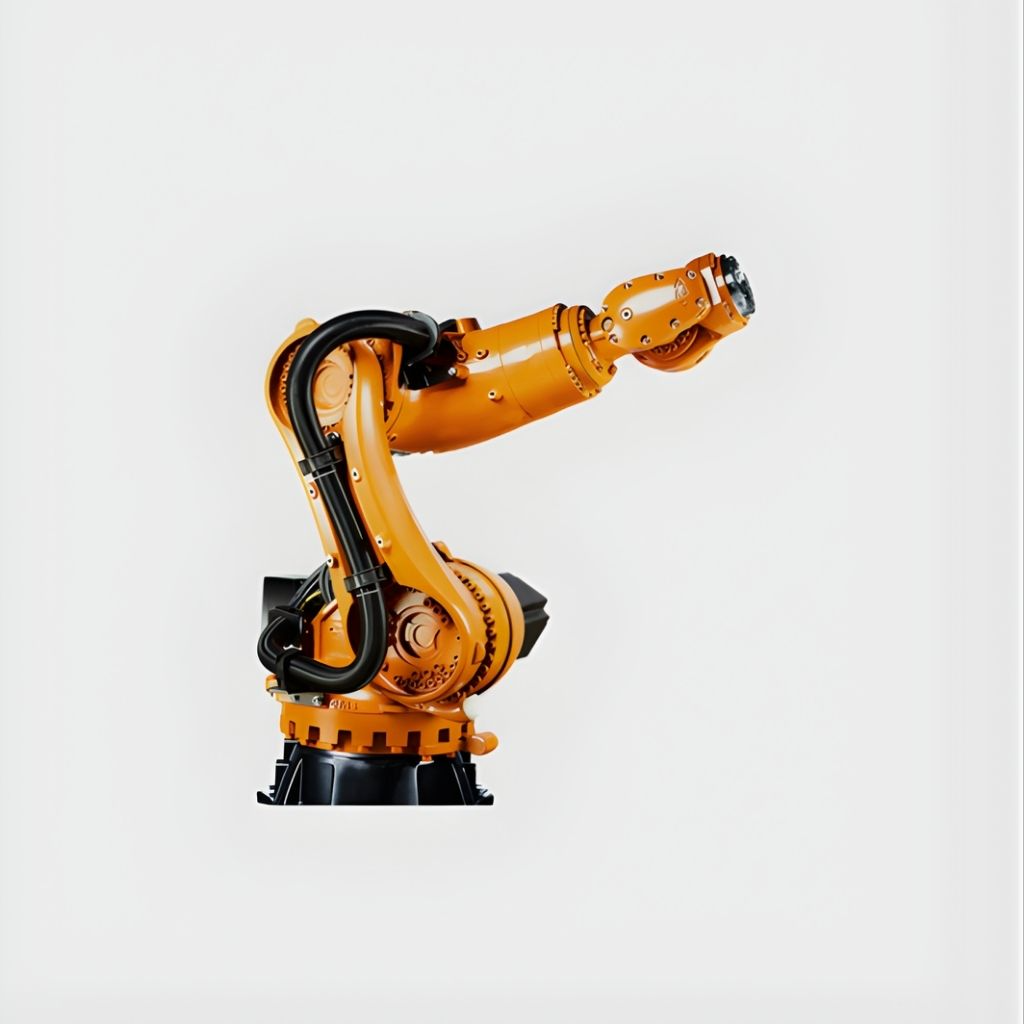
Welding Applications
The use of automation in joining operations contributes to maintaining quality standards in manufacturing environments. Welding applications ensure seam continuity by progressing with fixed parameters and reduce operator-related variability.
Throughout the process, speed, angle, and heat input are controlled within specific ranges. This structure offers the advantage of achieving the same result repeatedly, especially in mass production. Incorrect parameter selection, surface incompatibility, and lack of equipment calibration during application may lead to quality fluctuations. Therefore, system setup and process compatibility are handled carefully.
Automation solutions progressing with methods such as MIG/MAG and TIG in different production scenarios are integrated into the production line to ensure continuity. For more detailed technical structure, you can review the Welding Robot content.
Assembly and Loading Systems
Automating part feeding and transfers increases the continuity of operational flow during production. Assembly and loading systems optimize process times with proper positioning and reduce the need for manual intervention.
Motion planning, part detection, and position verification steps are carried out systematically throughout the operation. Misalignment, synchronization issues, and equipment incompatibility may negatively affect production efficiency. Therefore, system selection suitable for the application area and the integration process are carefully planned.
Solutions used in different sectors balance workload and increase operational control by adapting to the production line. For more information about application details and usage scenarios, you can review the Loading Robot content.
Industrial Robots in Welding Applications
Automation solutions are preferred to ensure consistent progression of joining operations in mass production. These systems provide continuity in weld quality by progressing with fixed parameters and reduce operator-related variability.
The reason for their preference is to maintain speed and accuracy simultaneously in the production line. Deviations in quality standards are often caused by incorrect settings, surface incompatibility, and lack of equipment calibration. Therefore, system setup is planned according to process requirements, and application scenarios are defined in detail.
Usage areas shaped according to different production needs include:
- Robotic welding systems: Ensure homogeneous structure formation along the seam and increase repeatability accuracy by progressing at constant speed and angle.
- Integration of welding applications: Systems operating with MIG/MAG and similar methods adapt to the production line and provide uninterrupted progression.
- Long seam operations: Maintain quality standards by progressing with the same parameters in pipe and construction production.
- Circular joining applications: Support uniform distribution across the surface by working with rotating systems.
- Multi-station production lines: Facilitate production planning by enabling different tasks to be managed within the same system.
Systems established with parameter compatibility increase quality stability in production output and optimize control mechanisms. Considering part type, method selection, and line integration together during the decision phase results in more efficient outcomes.
Robotic Welding Systems and Automation
Automation systems are utilized in joining operations to maintain standard quality. Robotic welding systems make it possible to achieve the same result in every operation through parameter control.
Incorrect parameter selection and insufficient surface preparation may lead to inconsistencies in result quality. Therefore, system setup and process compatibility are handled carefully.
These solutions, which adapt to different production scenarios, provide flexibility in production planning and increase operational control. For application examples, you can review the Robotic Welding Applications content for comprehensive information.
Automatic Welding Robots
Automatic systems used in mass production environments ensure uninterrupted progression of joining operations. Automatic welding robots minimize fluctuations in production quality by operating with fixed parameters.
For the application to proceed properly, motion planning, weld path tracking, and parameter management are maintained in a controlled manner. Incorrect programming, equipment incompatibility, and lack of maintenance may cause performance loss. Therefore, system selection and installation are planned according to technical requirements.
These solutions used in various sectors balance production speed and reduce workload. For more information about application details and system structure, you can review the Automatic Welding Robot blog content.
Welding Robot Operator and Occupational Safety
Operator control and occupational safety practices play an important role in ensuring the efficient operation of automation systems. The welding robot operator ensures that the system operates with the correct parameters and monitors the process.
Equipment monitoring, area control, and safety procedures are systematically implemented throughout the operation. Insufficient training, neglect of protective measures, and incorrect intervention may pose risks. Therefore, operator training and compliance with safety standards are prioritized.
Properly implemented safety processes support production continuity and reduce operational risks. For application steps, you can review the Robot Welding Operator content.
Shielded Gas and MIG/MAG Welding Robots
Arc joining operations performed under shielding gas are widely preferred in mass production to achieve consistent results. MIG/MAG-based systems balance weld quality by progressing with fixed parameters through wire feeding and gas control.
The reason for their preference is the ability to achieve fast and repeatable results on different material types. Incorrect gas selection, insufficient surface preparation, and lack of calibration may cause inconsistencies in results. Therefore, parameter compatibility and system settings are carefully planned before application.
Application areas that vary according to production needs:
- Sheet metal production: Provides fast progression in thin and medium-thickness materials, balances production time, and maintains surface integrity.
- Automotive body operations: Maintains quality standards sustainably by progressing with fixed parameters at repetitive joining points.
- Mass production lines: Enables continuous production with the same parameters by working integrated with industrial robots.
- Steel construction applications: Reduces error rates by progressing at constant speed and angle in long seam operations.
- Joining in different positions: Enables controlled application in hard-to-reach areas by working with rotating systems.
When all these scenarios are evaluated, systems established with correct parameters balance production quality and strengthen process control. For more comprehensive information on shielding gas-based solutions and application details, you can review the Shielded Gas Welding Robot content.
Eko Kaynak Industrial Robot Solutions
Robotic applications developed to achieve standard quality in welding processes and reduce operator-induced variability are designed specifically for on-site requirements by Eko Kaynak. The established systems not only provide automation but also optimize motion accuracy and process continuity together.
Each application is structured according to part geometry and the selected welding method. This approach enables the creation of robotic structures that adapt directly to the working environment rather than relying on standard systems. The technical evaluation carried out before installation helps prevent potential incompatibilities that may lead to performance loss.
During the integration of robotic welding systems into the production line, equipment layout and motion capability are considered together. In this way, the existing setup is preserved and operations continue without interruption. Pick and place applications used for part transfer are also integrated into this structure, ensuring that workpieces are moved to designated points in a controlled manner.
The key contributions of Eko Kaynak solutions in the field can be summarized as follows:
- Ensures consistency in joint quality by progressing with the same parameters in repetitive welding operations.
- Supports seamless operation within the existing production line by enabling robotic systems to work in harmony with the current setup.
- Improves positioning accuracy through pick and place applications used in part transfer.
- Offers system configurations that can be restructured to adapt to different production scenarios.
With this approach, robotic systems help maintain consistency in production output while minimizing fluctuations caused by manual operations.
Increase Your Efficiency with Robotic Welding Systems
Robotic systems are used in repetitive joining operations to maintain the balance between speed and quality. Applications progressing with fixed parameters reduce error rates, strengthen process control, and support production continuity. For technical details, you can review the Welding Robots content.
For detailed information about industrial robot solutions, you can contact Eko Kaynak.