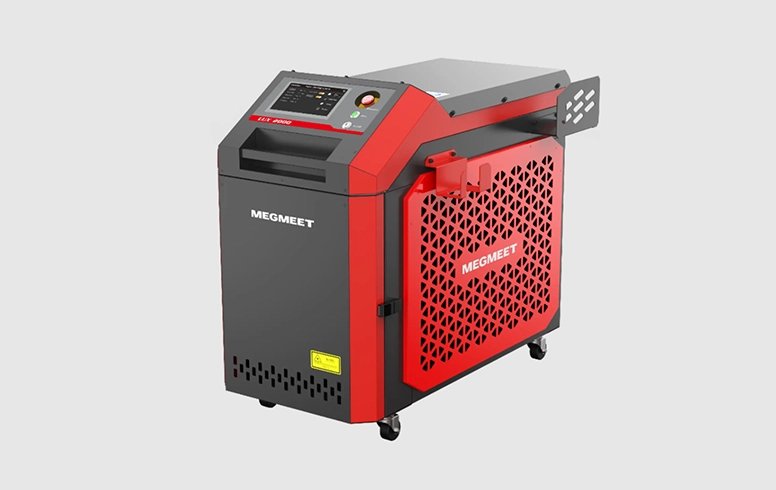
What Should Be Considered When Choosing a Laser Welding Machine?
In industrial production, the correct equipment selection is decisive in terms of long-term performance and cost balance. During system selection, the working area, production volume, and workpiece geometry should be evaluated together.
A welding machine selected with a technical configuration suitable for the need increases process stability while reducing the error rate. Clear analysis of technical criteria ensures that the investment delivers efficient results.
The main elements to consider during the selection process are as follows:
- Power value: The watt capacity must be suitable for the type of material to be processed and the planned penetration depth. Insufficient power may lead to superficial joints, while excessive power may cause deformation.
- Welding thickness: The wall thickness of the workpiece must be compatible with system capacity. Thin sheet applications and heavy industry projects requiring high thickness demand different system structures.
- Cooling system: When choosing between air- or water-cooled options, working duration and environmental conditions should be taken into consideration. Stable temperature control directly affects the lifespan of optical components.
- Automation compatibility: In production requiring integration with robotic cells, positioners, or PLC-controlled lines, the system’s communication infrastructure should be evaluated.
- Beam quality and focus stability: For seam form continuity, it is important that the optical structure delivers stable performance.
Comprehensive analysis of technical data contributes to achieving sustainable quality in the production process. A properly configured system also offers balanced performance in terms of energy consumption and maintenance planning.
What Are the Types of Laser Welding?
Laser-based systems used in industrial production are divided into different categories according to beam generation technology and application area. Criteria such as the precision required by the production line, material type, and process speed determine the system to be preferred.
Welding machines developed with different technologies offer variable performance values in terms of beam quality and energy density. Choosing the correct type directly affects seam form continuity and process stability.
The main types of laser welding are as follows:
- Fiber laser welding: Stands out with high beam quality and low energy loss. It is widely used in thin sheet applications, precision part joining, and production lines requiring automation integration. Its relatively low maintenance requirement contributes to operational continuity.
- CO₂ laser welding: Uses gas-based beam generation technology. It provides stable performance in wide-surface applications and certain metal types. Optical path length and system dimensions are configured differently compared to other technologies.
- Disk laser systems: With high power density, they can provide deep penetration in thick materials. They are preferred in heavy industry applications in terms of beam stability and efficiency. They deliver balanced results in projects requiring high energy transfer.
- Hybrid laser systems: Deeper and more controlled joints are achieved by combining the laser beam with another welding process.
Each technology should be evaluated according to material thickness, production capacity, and integration requirements. Selecting a system suitable for application conditions optimizes the balance of quality and speed in production.
Areas of Use of Laser Welding
Laser technology has a wide range of applications in production processes requiring high precision and controlled heat input. Thanks to narrow seam geometry, low deformation rate, and high speed advantage, reliable results are obtained in different sectors.
A laser welding machine integrated into the production line or operating independently can adapt to various needs, from mass production to custom manufacturing. The main areas of use can be listed as follows:
- Automotive industry: Preferred in the joining of chassis components, exhaust systems, and thin sheet parts. High repeat precision ensures stable quality in mass production lines.
- Defense and aviation: Used in projects requiring controlled joining of lightweight alloy materials. Low heat input contributes to maintaining structural integrity.
- Electronics and medical manufacturing: Provides the advantage of a narrow focus diameter in precision applications requiring micro-scale joining. Minimum surface distortion is achieved in thin materials.
- Energy and heavy industry: Used in joints requiring deep penetration in pressure vessels, cylindrical tanks, and pipe systems. When integrated with automation systems, it accelerates the production process.
- Mold and metal manufacturing sector: Provides controlled welding capability in repair operations and custom production parts.
Wide material compatibility and process flexibility make laser technology a preferred method in various industrial fields. Properly configured systems optimize the balance of speed, quality, and energy efficiency in production.
Which Materials Can Be Welded with Laser Welding?
As material diversity increases in industrial production, the compatibility of the joining technology used becomes more critical. Thanks to beam focusing precision and controlled heat input, laser systems enable stable joints in different types of metals. The thermal conductivity, surface structure, and thickness of the material directly influence the determination of preferred parameters.
The main metals that can be joined with laser technology are as follows:
- Stainless steel: Widely used in applications requiring corrosion resistance. Thanks to its low deformation advantage, aesthetic and smooth seam forms are achieved in thin sheets. It is preferred in food equipment, medical parts, and decorative metal products.
- Aluminum: Due to its high thermal conductivity, it requires controlled power adjustment. Offering the advantage of lightness, this material is frequently used in the automotive and defense industries. With proper parameter selection, pore formation is minimized.
- Carbon steel: Preferred in projects requiring structural strength. Deep penetration can be achieved with appropriate power density, and strength loss is kept at a minimum level. It is common in machinery manufacturing and steel construction fields.
- Titanium: Stands out in aviation and advanced engineering applications with its high strength-to-weight ratio. High-quality joints are obtained with a controlled atmosphere and proper gas shielding.
When parameter settings suitable for the material type are applied, the laser system offers broad application flexibility in different sectors. The correct system structure ensures balanced results in terms of surface quality and mechanical strength.