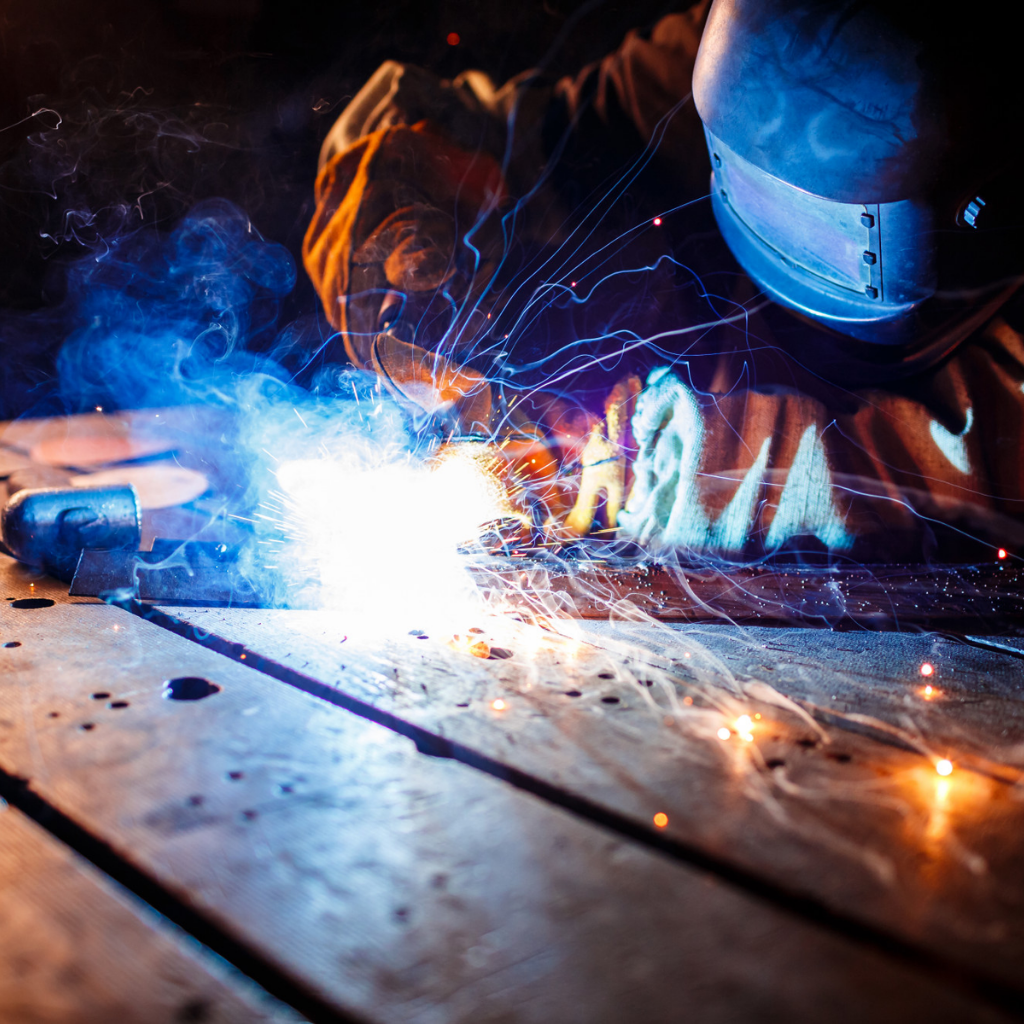
Welding Electrode

Welding electrode is an arc welding consumable that enables the permanent joining of metal parts by generating an electric arc. With its metal core and protective coating structure, it conducts current, protects the weld pool from external influences, and ensures the formation of a strong and controlled joint.

Welding electrode is preferred in a wide range of applications, from production to maintenance operations. It provides a reliable joining solution in many sectors such as steel construction manufacturing, machinery production, shipbuilding, pipelines, and workshop operations. Electrode selection directly affects joint strength, surface form, and service life. When a model suitable for the application is chosen, an efficient and controlled welding process is achieved.

What is a Welding Electrode?

One of the most fundamental consumables that enables the permanent joining of metal parts is the electrode. It creates an arc through electric current and forms a strong bond between two surfaces by means of the molten metal. This material, which directly affects production quality, plays a decisive role in terms of sealing and surface integrity.

A welding electrode consists of a metal rod that conducts electric current in arc welding processes and a protective coating surrounding it. While the metal core section conducts the current, the outer coating contributes to stable arc burning and protects the weld pool from external effects.

When the correct product is selected, a cleaner bead, more balanced progression, and controlled melting are obtained. There are options suitable for different applications; they are produced with varying compositions for materials such as carbon steel, stainless steel, or cast iron.

The main characteristics can be listed as follows:

  • It joins metals by generating an arc through electric current.
  • The molten core metal acts as filler between two parts.
  • The coating structure forms gas and slag to protect the weld area.
  • It adapts to various applications with different diameters and coating types.
  • A choice suitable for technical requirements creates joints that offer high mechanical strength and long-lasting performance.

It has a wide range of use from industrial production to workshop operations. Selecting a model suitable for the project is of critical importance in terms of occupational safety and performance.

Where is a Welding Electrode Used?

Electrodes, which play an active role in all production processes requiring metal joining, are preferred to create reliable connections in different sectors. There is a broad range of applications, from construction sites to heavy industry facilities. Choosing the right product is critically important to achieve strong weld beads in structures requiring durability.

When the field of use is examined, steel construction manufacturing ranks first. It is preferred for joining metal parts in structures such as factory buildings, bridges, platforms, and load-bearing systems. In machinery production, it is actively used in the formation of chassis, bodies, and connection points.

It plays an important role in sheet metal joining and maintenance operations in the shipbuilding sector. It is applied in pipelines to obtain leak-proof connections. In the automotive sector, it is used in chassis repair and the assembly of custom production parts.

Application areas are generally classified as follows:

  • Steel structure and construction projects
  • Machinery and equipment manufacturing
  • Shipbuilding and shipyard operations
  • Pipeline assembly and repair operations
  • Industrial maintenance and field applications

It is preferred in a wide area, from small-scale workshop production to large-volume industrial projects. Determining the electrode type according to technical requirements strengthens occupational safety, increases connection quality, and ensures performance continuity.

Types of Welding Electrodes

Electrode options produced for different metal types and working conditions vary according to application needs. Criteria such as coating structure, current type, and usage position are decisive in the selection process. The correct choice directly affects the strength and surface quality of the weld bead.

Welding electrode types are classified according to coating type and purpose of use. While rutile-coated models offer easy arc ignition and smooth surface results, basic-coated options are preferred in projects requiring high mechanical strength.

Cellulose-containing electrodes provide advantages in vertical and pipe welding. Nickel-alloy products stand out in cast repairs. Titanium-added alternatives offer stable burning performance. Iron powder types support obtaining higher filler efficiency.

The main classification is as follows:

  • Rutile-coated: Practical to use and provides a smooth bead appearance.
  • Basic-coated: Preferred in structures requiring high strength.
  • Cellulose-coated: Efficient in pipeline and field operations.
  • Nickel-alloy: Used in the repair of cast materials.
  • Titanium-containing: Provides a balanced arc structure.
  • Iron powder: Enables faster filler deposition.

When the appropriate model for the project is determined, the production process progresses in a more controlled manner and long-lasting joints are achieved.

Kaynak Elektrodu

Rutile-Coated Electrodes

It is widely preferred in workshop operations and general steel applications thanks to easy arc formation and smooth bead structure.

Basic-Coated Electrodes

It provides strong mechanical strength in construction projects requiring high durability and helps reduce the risk of cracking.

Cellulose-Coated Electrodes

Its structure providing deep penetration delivers effective performance in pipeline assemblies and applications performed in vertical positions.

Nickel-Coated Electrodes

It supports obtaining strong joints with its compatible structure in the repair of cast parts and the joining of different metal types.

Titanium-Coated Electrodes

With balanced arc stability and low spatter rate, it is preferred in operations targeting cleaner surface quality.

Iron Powder Electrodes

Thanks to increased filler capacity, it enables faster progression and contributes to efficiency in mass production processes.

How to Choose a Welding Electrode?

Choosing in accordance with technical requirements is the most important step directly affecting weld quality. The type of metal to be used, material thickness, and working position are decisive in the selection process. An incorrectly selected product may reduce bead strength and cause unwanted surface defects.

When selecting a welding electrode, the chemical structure of the material to be joined should first be considered. Different compositions are preferred for different metals such as carbon steel, stainless steel, or cast iron. Then, material thickness is evaluated; smaller diameter products are suitable for thin sheets, while options capable of carrying higher current are appropriate for thick sections.

Welding position is also an important criterion. Types with high arc stability should be preferred in vertical or overhead positions. The working environment and the expected mechanical strength value are also taken into account in the selection process.

The following criteria should be evaluated during selection:

  • Type and strength class of the base metal
  • Part thickness and applicable current range
  • Welding position and access conditions
  • Expected mechanical performance and sealing requirement
  • Production speed and surface quality expectation

When a product suitable for the application is selected, a more balanced arc forms, connection quality increases, and a long-lasting joint is obtained. The correct selection also directly supports production efficiency.

Welding Electrode Dimensions

Different diameter and length options are determined according to the current value required by the application and the material thickness. When the correct size is selected, the arc burns more stably, the bead form develops in a more controlled manner, and surface integrity is preserved. While small-diameter products are preferred for thin-section metals, larger-diameter options are used in joining thick parts.

Various diameter and length options are available on the market. As the diameter increases, current-carrying capacity and filler efficiency rise. Longer forms provide the advantage of uninterrupted operation on wide surfaces, while shorter options offer greater control in narrow and confined areas.

The following criteria should be considered when selecting size:

  • Thickness of the metal to be joined
  • Applicable current range
  • Welding position
  • Width of the access area
  • Desired filler amount

Preferring a small diameter for thick materials may lead to insufficient penetration. Likewise, using a large diameter in thin sheets increases the risk of burn-through and deformation. When the appropriate size is determined, more balanced progression is achieved, labor time is shortened, and a more aesthetic weld bead is obtained. Correct size selection provides a significant advantage in terms of performance and cost control.

For detailed information about welding electrode options and to determine the solution suitable for your project, you may contact Eko Kaynak.